
Decoding Cellular: From 1G to 5G Explained
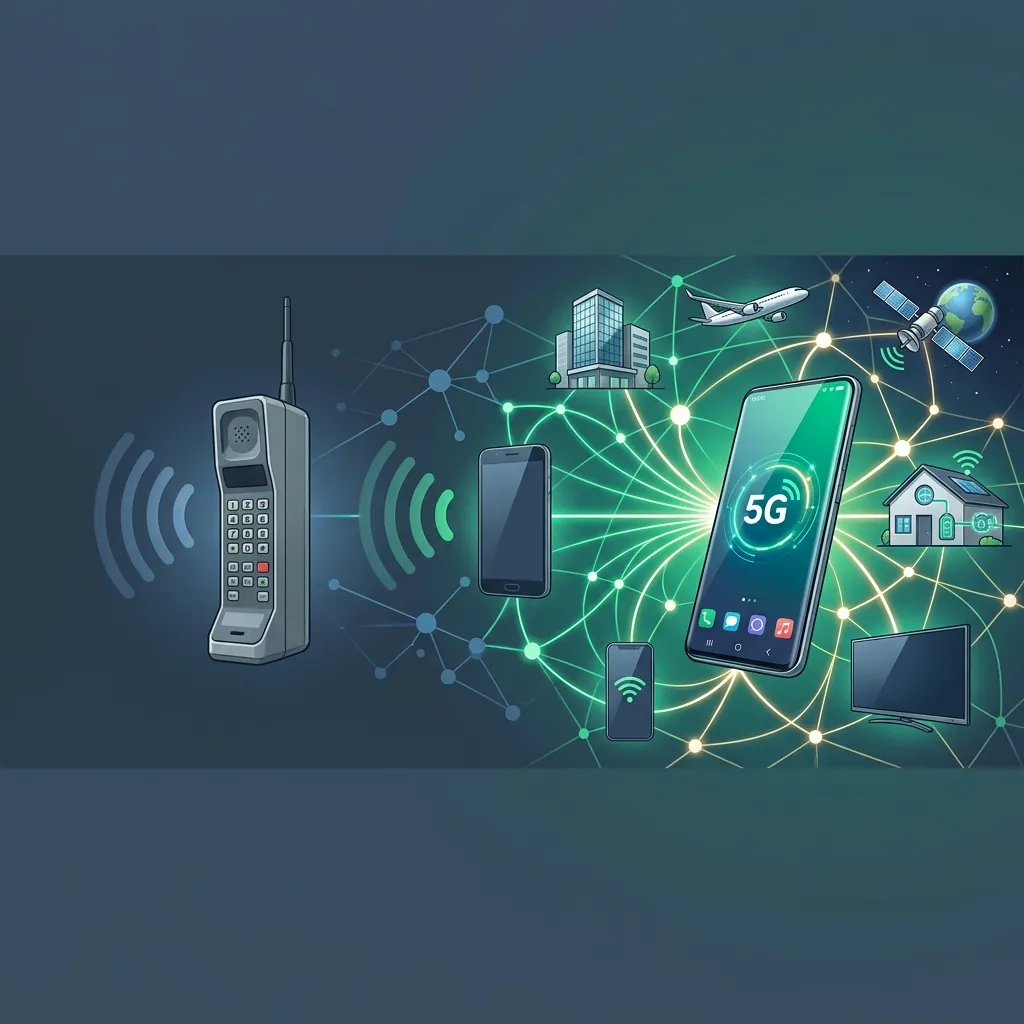
A complete guide to understanding how cellular communication evolved from clunky analog phones to the ultra-fast, IoT-connected 5G networks powering modern business infrastructure.
Summary
The internet revolutionized communication, and the leap to mobile internet fundamentally changed how the world operates. While the 2007 debut of the original iPhone popularized the smartphone concept, the true hero was the invisible cellular infrastructure making that mobility possible. Today, navigating cellular network terminology, frequency bands, and mobile operators can feel like decoding a foreign language.
This guide breaks down the history of mobile networks from 1G to modern 5G, explains how radio spectrum actually works, and helps you understand how to navigate the complex world of cellular communications to secure the best, most reliable connectivity for your business.
The Invisible Evolution: From 1G to 5G
The wireless technology powering our modern mobile lives experienced a decades-long evolution of radio frequency engineering.
1G: The Analog Era
In the 1980s, 1G introduced the very first generation of mobile networking. These were purely analog systems designed strictly for voice calls. The phones were the size of bricks, battery life was measured in minutes instead of hours, and the connection was notoriously unreliable—but it laid the critical foundation for untethered communication.
2G: The Digital Shift and Text Messaging
The shift to 2G in the 1990s was revolutionary because it digitized the cellular signals. This brought us SMS text messaging, encrypted calls, and the very first (and painfully slow) iterations of mobile internet protocols, like EDGE. Theoretical speeds topped out at around 0.4 Mbps, making web browsing an exercise in extreme patience and high data costs.
3G: The Dawn of the Mobile App
Around the time the first iPhone launched, cellular infrastructure was pushing heavily into 3G. This generation provided the bandwidth necessary to transfer pictures, load basic web applications dynamically, and stream low-quality video over the air. 3G was the catalyst that made the modern "App Store" economy possible and drove massive global smartphone adoption.
4G LTE: True Broadband on the Go
4G brought true Internet Protocol (IP) networking to mobile data, offering home-broadband speeds on a handheld device. It enabled high-definition video streaming, seamless video conferencing, and the rise of the massive gig economy. 4G was incredibly fast and reliable, marking the first time cellular could legitimately serve as a primary internet connection for remote businesses.
5G and Beyond: The Internet of Things
Currently, 5G offers massive leaps in technological capacity. It’s not just about downloading files faster; 5G brings drastically higher network efficiency, significantly lower latency, and the ability to connect millions of devices simultaneously within a small geographical area.
This density is ushering in the total IoT (Internet of Things) era. With 5G, everything from commercial HVAC systems to autonomous fleet vehicles, agricultural sensors, and smart city grids can securely connect directly to the cloud without needing localized Wi-Fi.
How Cellular Frequencies Work
Cellular providers must operate within specific radio frequencies, known as spectrum, which are heavily regulated and auctioned by the Federal Communications Commission (FCC) in the United States.
The most important rule of cellular spectrum is the inverse relationship between speed and distance:
- Low-Band Frequencies (e.g., 600MHz): These signals travel for miles and easily penetrate thick concrete walls, forests, and cars. However, they carry less data. They are perfect for wide geographical coverage but generally top out at a couple hundred megabits per second.
- Mid-Band Frequencies: Often considered the "Goldilocks" zone of 5G, offering a great balance of speed (often reaching gigabit speeds) and decent effective range.
- High-Band (Millimeter Wave): These ultra-wideband frequencies can transmit data at multi-gigabit speeds instantly, but they are incredibly fragile. They require direct line-of-sight to the cell tower antenna and can be completely blocked by something as simple as a tree leaf or a pane of glass.
Large carriers spend billions aggregating these different spectrum bands. Your smartphone or 5G business router intelligently switches between these frequencies in real-time depending on whether you need immense bandwidth (high-band) or a reliable connection locked deep inside an office building (low-band).
The Big Three vs. MVNOs
In the US, the cellular network infrastructure is dominated by the "Big Three": Verizon, T-Mobile, and AT&T. (Regional carriers like US Cellular still exist but rely heavily on roaming access agreements with the major players).
However, you don't actually have to buy service directly from the Big Three. Evolving regulations forced them to lease their excess network capacity to Mobile Virtual Network Operators (MVNOs).
Hundreds of companies buy network access in bulk and resell it at significantly lower rates.
- The Pros: Substantial cost savings. You can often cut a business phone bill in half while utilizing the exact same cellular towers as a premium carrier.
- The Cons: During times of heavy network congestion (like at a crowded stadium or during a disaster event), the host carrier will prioritize their direct customers over MVNO traffic (a process known as "deprioritization").
For many businesses looking to manage IT costs, the massive savings of an MVNO massively outweigh the occasional instances of slower data routing.
The Rise of the eSIM
One of the most impactful recent advancements in cellular technology—thanks in part to the international standardization of 5G based on the GSM (Global System for Mobile communications)—is the eSIM (Embedded Subscriber Identity Module).
Historically, connecting a device to a specific carrier required physically inserting a small plastic SIM card. Today, devices like the newest iPhones and many commercial network appliances ship without a physical SIM slot at all. The network credentials are downloaded securely via a QR code or an app.
For businesses, eSIMs offer incredible flexibility:
- Instant Provisioning: IT departments can activate an employee's phone or configure a remote 5G firewall instantly, without waiting for physical cards to ship in the mail.
- Dual-Network Redundancy: A single device can hold multiple eSIM profiles simultaneously, allowing it to seamlessly switch between two different networks (e.g., AT&T and Verizon) if one network experiences a local outage.
(Note on Unlocking: When procuring hardware for your business, ensure the devices are "unlocked." Carriers often try to "SIM lock" financed devices, preventing you from utilizing independent network profiles until the device is paid off or an unlocking request is processed).
Optimizing Your Connectivity Strategy
With all the different plans, frequencies, and providers available, selecting the right cellular strategy for your business is no longer as simple as walking into a retail cell store.
Whether you need failover 5G internet for your office network, secure mobile devices for a remote workforce, or data plans to support a fleet of field tablets, proper IT planning is critical. By understanding the underlying architecture of mobile networks, you can find solutions that offer superior reliability at a fraction of standard corporate rates.

About the Author
Kevin Smith
With over 25 years of verifiable IT experience across the Carolinas, Kevin Smith is an industry-recognized expert in Microsoft Cloud deployment, disaster recovery, and HIPAA compliance. As the President of eSmith IT Consulting, establishing secure enterprise infrastructure isn't just theory—it's his daily practice.