
Co-Managed IT: The Smarter Option When You Already Have In-House IT
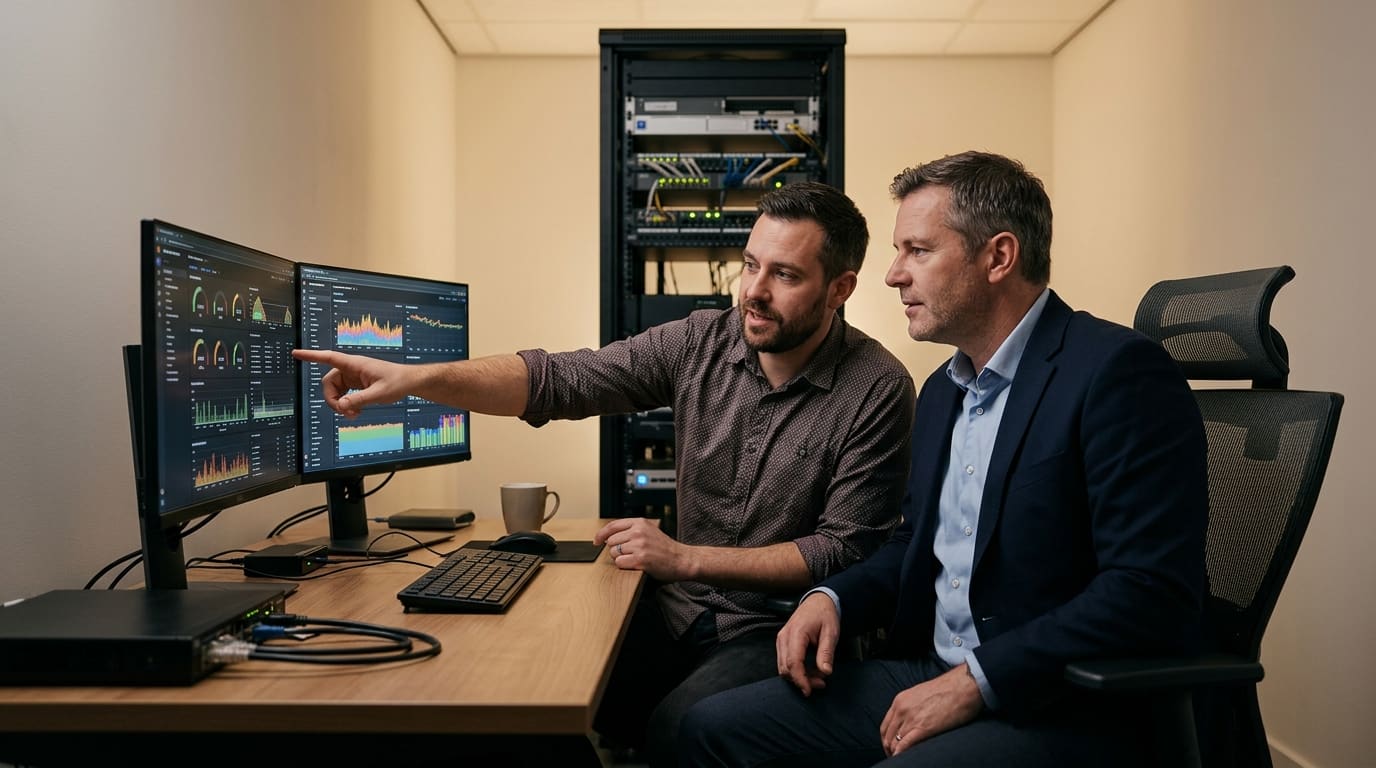
If your in-house IT person is stretched thin, co-managed IT gives them a full team behind them—without replacing anyone. Here's how it works and who it's built for.
Most conversations about managed IT services assume you're starting from zero—a business with no IT staff, no monitoring, and no plan. But that's not where a lot of growing Charlotte businesses actually are.
Many companies in the 30–150 employee range already have someone handling IT. Maybe it's a dedicated IT coordinator. Maybe it's a sharp office manager who grew into the role. Maybe you hired a solid technician two or three years ago who has kept things running—but is now visibly overwhelmed, handling everything from printer jams to network security to onboarding new hires.
That person is doing their best. The problem isn't their competence—it's the math. One IT generalist cannot cover everything a growing business needs, and the gaps they can't fill are usually the most expensive ones when something goes wrong.
Co-managed IT is built for exactly that situation.
What Co-Managed IT Actually Is
Co-managed IT—sometimes called co-managed services or Co-MIT—is a model where an MSP like eSmith IT partners with your existing in-house IT staff rather than replacing them. Your internal person keeps their role, their relationships, and their institutional knowledge of your environment. The MSP fills in the gaps: deeper cybersecurity tooling, 24/7 monitoring, specialized expertise, and backup coverage when your IT person is out.
Think of it as giving your internal IT person a full team behind them—on demand, at a fraction of the cost of hiring that team outright.
The split of responsibilities is defined upfront and tailored to what you actually need. Common arrangements include:
- Your IT person handles: day-to-day helpdesk, hardware procurement, vendor calls, new user setup, internal projects
- eSmith IT handles: 24/7 monitoring and alerting, advanced cybersecurity (EDR, patch management, threat response), backup management, after-hours and overflow support, escalations requiring deeper expertise
The line can be drawn wherever it makes sense for your business. There's no single template—co-managed is flexible by design.
The Single-Person IT Problem
A solo IT person is a single point of failure in ways most business owners don't fully appreciate until something goes wrong.
Coverage Gaps
Your internal IT person works business hours, takes vacation, and gets sick. When they're out, who handles an email outage at 7am or a server alert on a Friday night? In most small businesses, the answer is either the owner calls them on their day off, or nobody handles it until Monday.
A co-managed arrangement means there's always someone watching and always someone available—regardless of what your internal person's schedule looks like.
Depth of Expertise
IT is not a single discipline. Network engineering, cloud infrastructure, cybersecurity, VoIP systems, compliance—each is a specialty in its own right. A generalist IT hire can be competent across all of them at a surface level, but deep expertise in any one of them takes years to develop.
When your firewall needs to be reconfigured to support a new compliance requirement, or when an EDR alert fires at 2am showing lateral movement across your network, you need a specialist—not someone doing their best with limited experience in that domain. A co-managed MSP brings a bench of specialists across every discipline.
Tooling and Cost
Enterprise-grade security and monitoring tools are expensive when purchased individually. Remote monitoring and management (RMM) software, endpoint detection and response (EDR), backup and disaster recovery platforms, documentation tools, patch management systems—the stack a properly equipped IT operation needs runs $15–$25 per device per month before a single hour of labor is counted.
Under a co-managed arrangement, you access all of that tooling through your MSP partner's existing licenses, typically at a fraction of what you'd pay purchasing it yourself. Your internal IT person gets access to professional-grade tools they wouldn't otherwise have.
The Knowledge Silo Risk
When your only IT person leaves—and eventually they will; average IT tenure is 2.5–3 years—they take everything with them. Passwords, network diagrams, vendor relationships, the reason a specific server is configured the way it is, the workaround for that one application that only runs on a particular build. If that knowledge isn't documented somewhere accessible, their departure is a crisis.
A co-managed MSP maintains living documentation of your entire environment as a standard part of the engagement. When your internal person moves on, transition is managed rather than chaotic.
Who Co-Managed IT Is Built For
Co-managed IT is the right answer for businesses that fit any of these profiles:
You have an in-house IT person who is stretched too thin. They're handling helpdesk tickets, managing vendors, running projects, responding to security alerts, and supporting leadership—all at once. Burnout is a real risk, and critical things are falling through the cracks because there's only one of them.
Your IT person's expertise doesn't cover cybersecurity at the depth you need. They can configure antivirus and reset passwords, but advanced threat detection, incident response, penetration testing, and compliance frameworks are outside their wheelhouse. As cyber threats have become more sophisticated, the gap between general IT competence and security expertise has widened significantly.
Your business has grown beyond what one person can manage. What worked fine with 20 employees gets strained at 50 and breaks at 80. Adding headcount, locations, or remote workers multiplies the complexity of your IT environment—often faster than a solo IT person can adapt.
You need after-hours coverage but can't justify a second hire. You're not willing to pay for a second full-time IT employee—but you can't keep calling your current one on nights and weekends either. Co-managed provides that coverage without the headcount.
You're facing compliance requirements that need specialist depth. HIPAA, FTC Safeguards, SOC 2, CMMC—these frameworks require documented controls, audit trails, and ongoing verification that are difficult to maintain without dedicated expertise. A co-managed partner with compliance experience makes that manageable.
What Co-Managed IT Is Not
It's worth being clear about what this model isn't, because the word "managed" can create confusion.
It is not a replacement for your IT person. Your internal staff keeps their role entirely. Co-managed is additive—it expands what your team can do, not a transition toward eliminating in-house capability.
It is not a competing authority. Your internal IT person doesn't answer to the MSP. eSmith IT works alongside your existing staff, not above them. The relationship is collaborative, and your internal person retains ownership of their domain.
It is not a full managed IT contract. The scope is narrower and the cost is lower precisely because you're not starting from scratch. You're supplementing existing capability, not outsourcing everything.
What the Cost Comparison Looks Like
For a business with 40 employees and one in-house IT coordinator, the financial comparison is straightforward.
Hiring a second IT person to provide coverage, deeper expertise, and after-hours support:
| Cost Category | Annual Estimate | |---|---| | Second IT hire salary | $65,000–$90,000 | | Benefits and employer overhead | $16,000–$28,000 | | Tools and software | $3,000–$8,000 | | Training and certifications | $2,000–$5,000 | | Total | $86,000–$131,000/year |
Co-managed IT with eSmith IT for a 40-device environment, covering monitoring, cybersecurity, backup, and overflow support:
| Plan Component | Monthly | Annual | |---|---|---| | 24/7 monitoring and patch management | $600 | $7,200 | | EDR (SentinelOne) across all endpoints | $480 | $5,760 | | Backup management | $200 | $2,400 | | Overflow/escalation support hours | Variable | $3,000–$6,000 | | Total | ~$1,300–$1,800/mo | ~$16,000–$22,000/yr |
The coverage is broader, the expertise is deeper, and the cost is roughly 75–80% lower than a second hire—with no turnover risk, no training budget, and no PTO gaps.
How eSmith IT Approaches Co-Managed Partnerships
We've been supporting businesses in the Charlotte metro area for over 25 years. A meaningful share of the clients we work with today came to us not because they had no IT support—but because their existing IT setup had outgrown what one person could handle alone.
When we enter a co-managed engagement, the first step is always a thorough documentation of your current environment: network topology, endpoint inventory, server configuration, backup status, and security posture. That documentation lives in our platform and is always accessible to your internal IT staff as well as ours.
From there, we define the division of responsibility clearly—in writing—so there's no ambiguity about who owns what. Your IT person knows exactly what they're handling and exactly what they can escalate to us. We know exactly what we're watching and what we're responsible for resolving.
What we typically bring to a co-managed relationship:
- 24/7 remote monitoring of your entire network, servers, and endpoints—alerts routed to our team around the clock so your IT person isn't on-call nights and weekends
- SentinelOne EDR deployed and actively managed across every device, with threat response handled by our security team
- Managed patch management with critical patches applied within 24–48 hours of release
- Backup monitoring and testing so your recovery capability is verified, not assumed
- Helpdesk overflow for periods when your IT person is out or ticket volume spikes
- Escalation for complex issues requiring network engineering, cloud infrastructure, or security specialist involvement
- Compliance support if your industry has HIPAA, FTC Safeguards, or other regulatory requirements
Your internal IT person gets to stop being the single point of failure for everything—and start being more effective at the parts of the job only they can do.
The Bottom Line
If you have an in-house IT person and you're considering adding another hire, a co-managed arrangement is almost always worth evaluating first. The coverage is comparable or better, the depth of expertise is significantly greater, and the cost is a fraction of a second full-time employee.
If your internal IT person is burning out, struggling to keep up, or simply doesn't have the background to handle advanced cybersecurity or compliance requirements, co-managed IT closes those gaps without disrupting the relationship you've already built.
eSmith IT provides co-managed IT services to growing businesses throughout Charlotte, Huntersville, Mooresville, Cornelius, Concord, and Gastonia. Contact us for a free assessment—we'll review your current IT setup, identify where the gaps are, and show you exactly what a co-managed partnership would look like for your environment.
Your IT person doesn't need to be replaced. They need backup.
About the Author
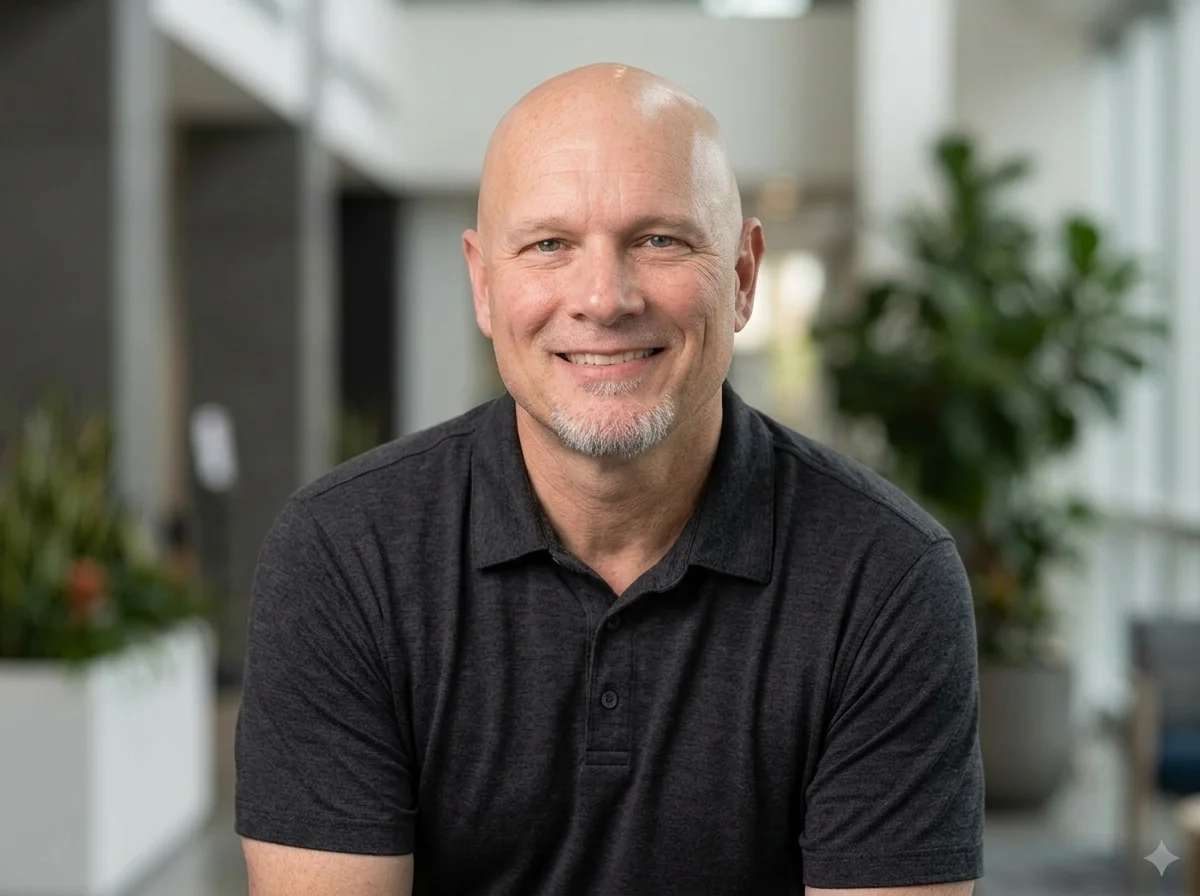
Kevin Smith
With over 25 years of verifiable IT experience across the Carolinas, Kevin Smith is an industry-recognized expert in Microsoft Cloud deployment, disaster recovery, and HIPAA compliance. As the President of eSmith IT Consulting, establishing secure enterprise infrastructure isn't just theory—it's his daily practice.